


Insights from Japan’s Prefabrication and Modular Construction Models
26 November 2025 | UniSA Enterprise Hub, Adelaide
Australia’s housing sector faces immense pressure to deliver more homes, more affordably, and more sustainably. With the country already falling behind on its National Housing Accord target of 1.2 million new homes, industry and government are being forced to rethink how housing is designed, manufactured and delivered.
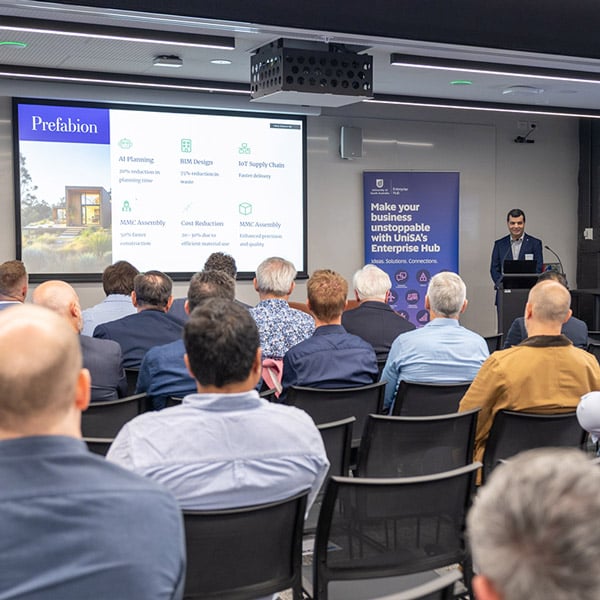
The Industry Briefing: Insights from Japan’s Prefabrication and Modular Construction Models brought together leading voices from academia, government, and industry to explore how lessons from Japan’s prefabricated housing sector could help reshape Australia’s approach to building.
Hosted by the University of South Australia, prefabAUS, and Shinka Management, the event drew a strong audience of builders, policymakers, academics, and students to the UniSA Enterprise Hub in Adelaide. Across five expert presentations and a lively panel discussion, speakers shared ideas on how prefabrication and modular construction can help address Australia’s housing challenges — and what must change for this opportunity to be realised.

Welcome and Opening Remarks
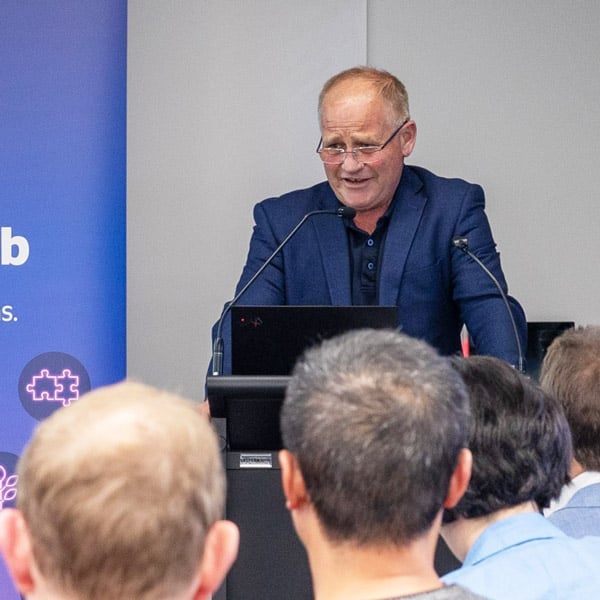
The evening began with a warm welcome from Peter Stevens, Director of Enterprise Partnerships at the University of South Australia. Stevens acknowledged the Kaurna people as traditional custodians of the land before setting the stage for the discussion ahead.
Reflecting on Australia’s housing shortfall, he noted that the nation is already tens of thousands of homes behind its first-year target under the National Housing Accord. “If we’re going to solve the issues of housing in this country,” he said, “we need to start thinking in different ways about how to address that challenge — whether that’s regulation, financing, or the way we actually build.”
He highlighted modular housing as a “significant opportunity” for change, observing that it’s only recently that major banks have begun offering loans for modular homes — a sign that attitudes are starting to shift.
Following his remarks, Dr Paul Smith, Director of Shinka Management, welcomed attendees on behalf of the organisers and introduced the evening’s line-up of speakers and panellists, setting the tone for an informative and forward-looking discussion.
View Recording of Welcome
Peter Stevens, Director Enterprise Partnerships, University of South Australia
Peter Stevens has over 20 years experience in sales, delivery and program management in highly complex environments across a range of clients and industries. Peter is currently responsible for the MBA and Executive Education portfolio for the University of South Australia.
The Current State of Australia’s Building Sector
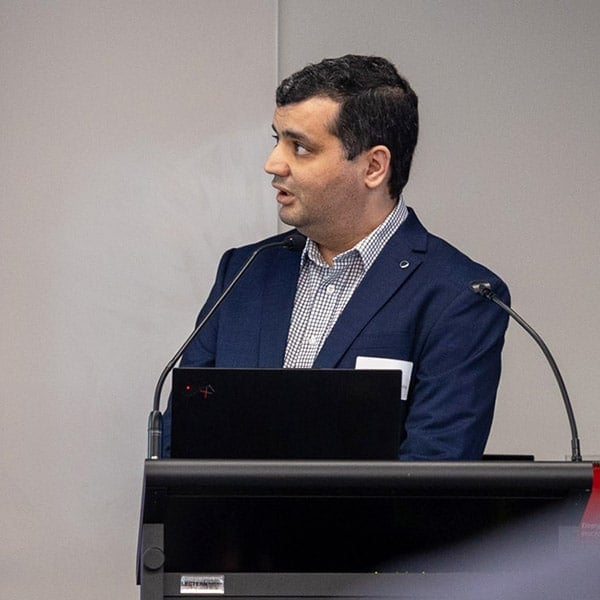
Dr Mehdi Amirkhani – Senior Lecturer, UniSA Online
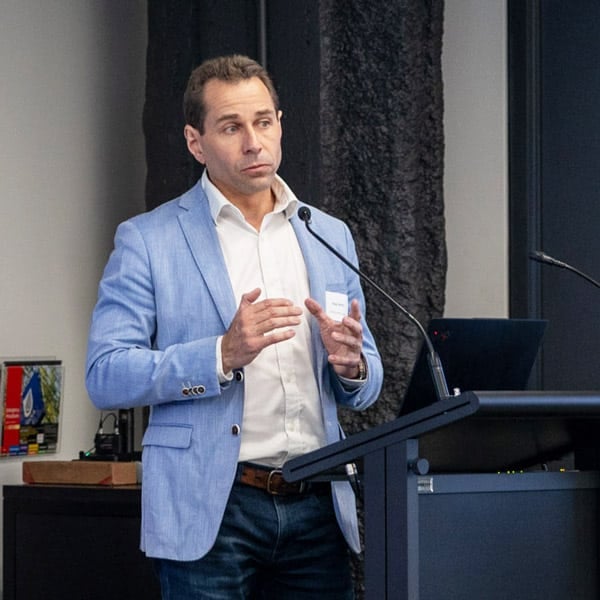
Dr Mehdi Amirkhani opened the presentations with a data-driven analysis of the housing sector’s structural challenges. He pointed out that while housing demand continues to rise, productivity across construction has fallen by 12 percent over the past three decades. Costs are escalating, labour is scarce, and the sector’s fragmented nature makes coordinated reform difficult.
Introducing the concept of Modern Methods of Construction (MMC) — which includes modular and prefabricated techniques — Dr Amirkhani identified eight “pillars” essential to transformation: regulation, insurance, procurement, education, design, digitisation, supply chain, and workforce. Each, he explained, must evolve for the industry to shift from site-built to factory-integrated delivery.
Drawing on collaborative research undertaken with Professor Rameez Rameezdeen and other UniSA colleagues, Dr Amirkhani outlined the Prefab + Innovation project — an initiative focused on reducing construction time by up to 50 percent, cutting waste by 75 percent, and achieving major cost efficiencies through digital planning and coordinated supply-chain management.
Comparing Australia to global leaders, he noted that Sweden produces around 80 percent of its new housing using prefabrication, Japan around 15 percent, and Australia only 6–7 percent. “We have to accelerate adaptation,” he urged, “but we also need to make sure we bring the industry and regulators along with us.”
View Recording of Presentation
Dr Mehdi Amirkhani, Senior Lecturer, UniSA Online
Mehdi has over a decade of professional experience as an architect and accredited home energy efficiency assessor. His research and teaching focus on sustainable building technologies, energy-efficient housing, and productivity in the construction industry.
Overcoming Design Barriers in Modular Timber Framing
Prof Rameez Rameezdeen – Professor of Construction & Project Management, UniSA STEM
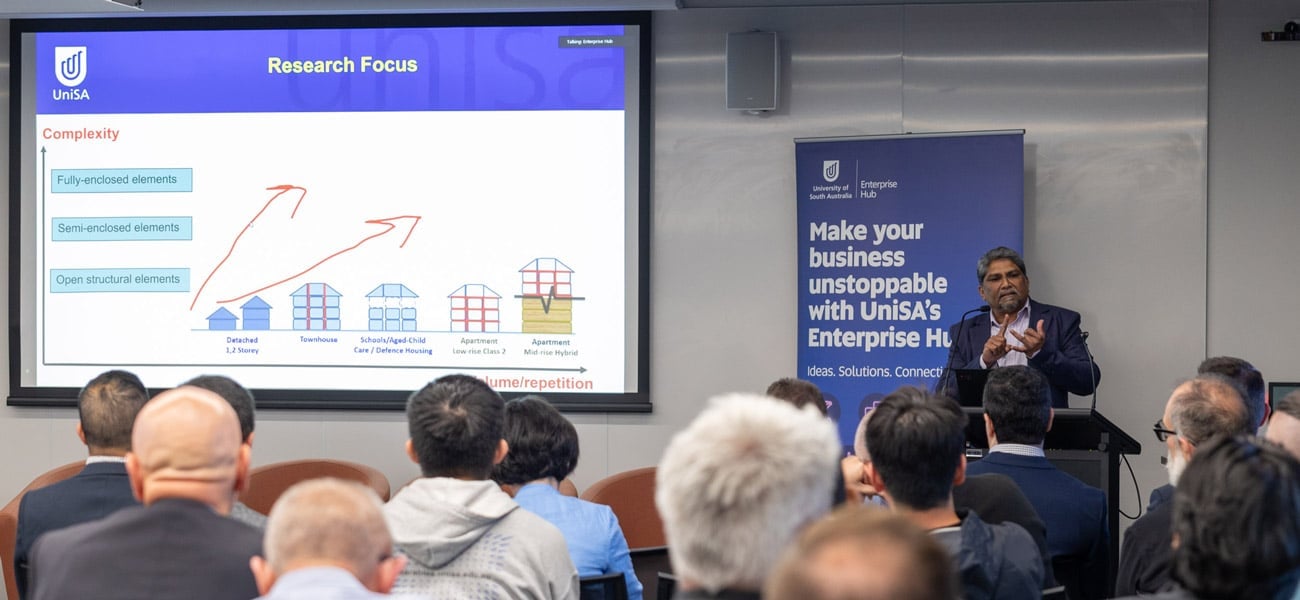
Building on Dr Amirkhani’s presentation, Professor Rameez Rameezdeen focused on one of the most immediate opportunities for improvement: the timber housing supply chain.
Through research conducted with the Frame & Truss Manufacturers Association, his team examined how design decisions made early in the project lifecycle influence off-site manufacturing productivity. The findings are clear — when design is not optimised for modular construction, rework and inefficiencies are inevitable.
Professor Rameezdeen advocated for the widespread adoption of Design for Manufacture and Assembly (DfMA) principles to streamline the transition from architectural design to fabrication. Early involvement of builders, engineers, and fabricators in the design process, he said, can reduce material waste by up to 30 percent and dramatically improve cost predictability.
He also discussed the role of automation in timber manufacturing, noting that automated systems can deliver exceptional quality and speed but require both investment and consistent demand to succeed. To support this, he called for national design standards for timber modular systems and stronger links between universities, TAFEs, and manufacturers to prepare the next generation of construction professionals.
View Recording of Presentation
Prof Rameez Rameezdeen, Professor of Construction & Project Management, UniSA STEM
As Professor of Construction and Project Management at UniSA STEM, Rameez leads UniSA’s research in timber and sustainable construction and has published extensively on construction productivity, technological innovation, and industrialised building systems.
Building the Future We Want – Australia’s National Mission for Smart Building
Mr Lance Worrall – prefabAUS
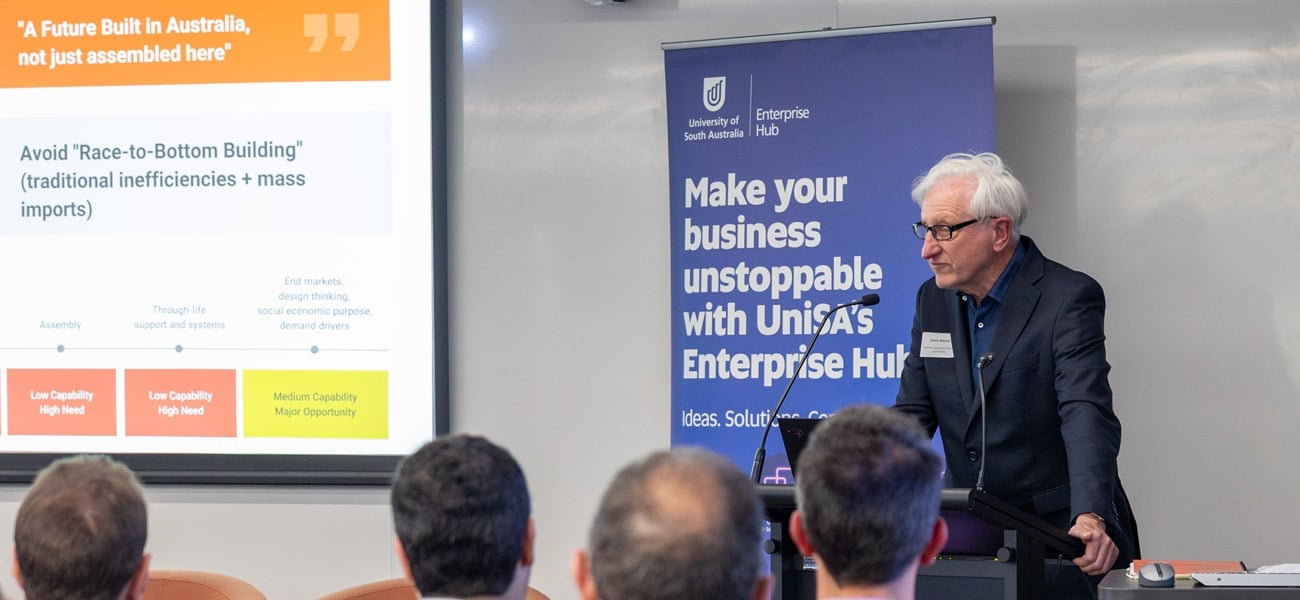
Representing prefabAUS, Policy Adviser and Industry Development Specialist Lance Worrall delivered an impassioned address outlining the organisation’s National Mission for Smart Building.
Now entering its third year, this mission provides a blueprint for transforming Australia’s construction industry into a digitally connected, advanced manufacturing ecosystem. Worrall described the sector’s current state — beset by insolvencies, inefficiencies, and underinvestment — as unsustainable. “Prefabrication and off-site manufacturing,” he said, “are the key to rebuilding productivity and creating high-value jobs across the nation.”
Worrall detailed the initiative’s 12 strategic priorities and 19 performance targets, which are helping to embed smart building principles within national housing and industry policy. He noted that prefabrication is now referenced in the National Housing Accord and that government support for modular capability and certification is growing.
In one of the evening’s most memorable remarks, Worrall stated:
“We will not have a smart-building future unless it is a future built in Australia — manufactured here, by Australians, for Australian conditions.”
He warned that reliance on imported flat-pack housing would deliver “the environmentally bog-standard” and undermine efforts to create resilient, sustainable, and locally beneficial housing outcomes.
View Recording of Presentation

Mr Lance Worrall, prefabAUS
Lance is a Policy adviser and industry development specialist with prefabAUS. He co-authored Australia’s Smart Building and Smart Manufacturing roadmaps and works on strategies to build capability and scale in advanced manufacturing and prefabricated construction supply chains.
Using Immersive Virtual Reality to Enhance Safety in Modular Construction
Dr Rongrong Yu – Senior Lecturer, UniSA Creative
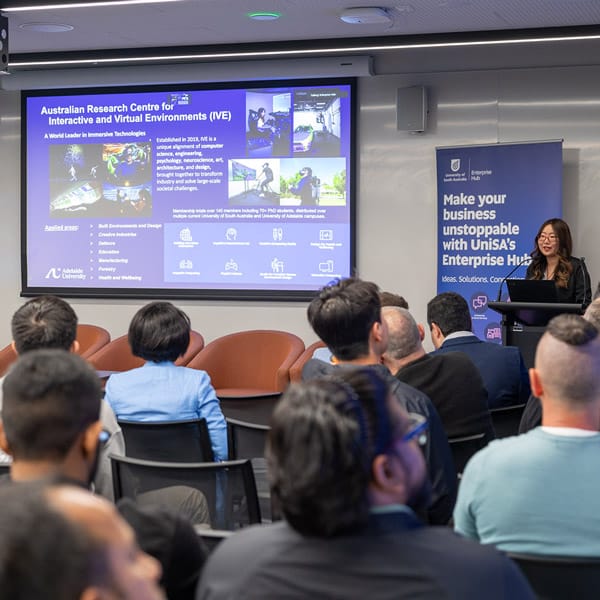
Dr Rongrong Yu showcased groundbreaking work from UniSA’s Australian Research Centre for Interactive and Virtual Environments (IVE), one of the world’s leading research groups in virtual and augmented reality technologies.
Her presentation explored how immersive simulation, digital twins, and computational design tools are helping transform the construction process. Dr Yu explained that her team uses VR to model modular assembly processes, allowing workers to experience and understand construction steps virtually before going on site.
The benefits are significant: safer work environments, improved collaboration between designers and fabricators, and faster on-site assembly with fewer errors. Dr Yu shared examples of projects where virtual testing identified design and logistics issues that would have caused delays and cost overruns if discovered later in the build.
She closed by inviting collaboration with industry partners to expand research into areas such as carbon reduction, mass customisation, and AI-driven generative design, all of which can help Australia achieve more sustainable prefabrication outcomes.

View Recording of Presentation
Dr Rongrong Yu, Senior Lecturer, UniSA Creative
Rongrong is a Senior Lecturer in Architecture at the University of South Australia. Her research focuses on modern methods of construction and computational design, leveraging advanced digital technologies to support sustainable design and construction processes.
Lessons from Japan’s Prefabricated and Modular Housing Industry
Dr Paul Smith – Director, Shinka Management
Bringing an international perspective to the evening, Dr Paul Smith shared insights from Japan’s highly industrialised housing industry.
Following World War II, Japan faced severe housing shortages, prompting the development of industrialised homebuilding systems. Over the decades, these evolved into sophisticated, customer-focused models that deliver high-quality, customised homes with factory-level precision.
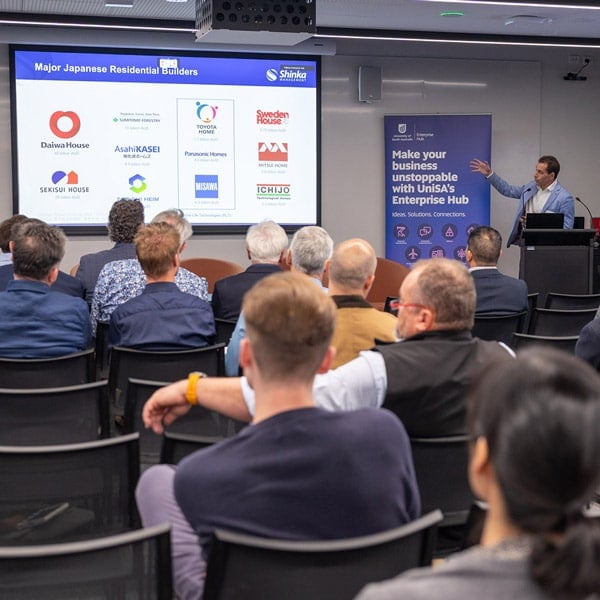
Dr Smith described how Japanese leaders such as Daiwa House, Sekisui House, Sekisui Heim, Sumitomo Forestry, Asahi Kasei, and Prime Life Technologies (a Toyota–Panasonic partnership) integrate design, manufacturing, and construction within unified corporate structures. This integration enables rapid production, consistent quality, and seamless after-sales support — all hallmarks of Japan’s housing market.
He also discussed how Japan’s builders have applied lean manufacturing principles to housing, creating systems that prioritise standardisation, efficiency, and continual improvement.
While Japan’s context differs, Dr Smith argued that Australia can learn much from its industrialised housing model. Rather than copying Japan’s high-automation systems, he suggested focusing on collaboration, technology transfer, and adapting proven practices to Australian conditions.
He concluded by previewing Shinka Management’s annual Japan Housing Mission, which provides building professionals firsthand exposure to Japan’s leading prefabricated housing manufacturers and their lean production systems.
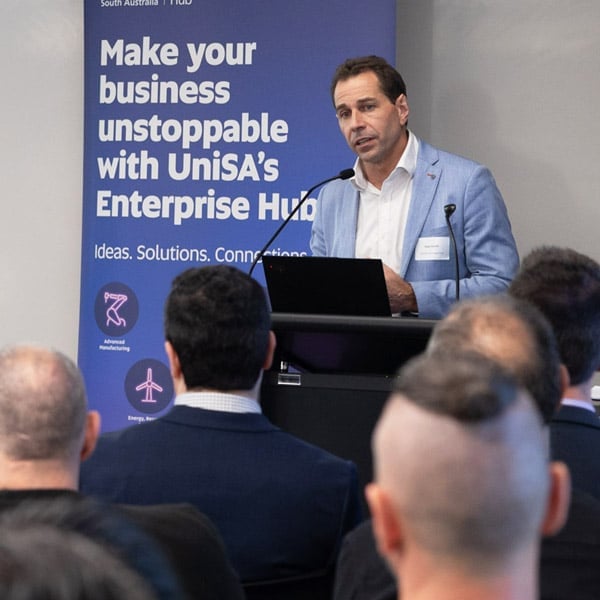
View Recording of Presentation

Dr Paul Smith, Director, Shinka Management
Paul has a PhD and Master’s in Engineering from Kyoto University and over two decades of experience facilitating collaboration between Japanese and international manufacturing sectors. He leads programs introducing Japanese lean manufacturing practices to global industry.
Panel Discussion – Crisis and Opportunity in the Australian Housing Sector
The evening culminated in a lively panel moderated by Dr Paul Smith, featuring Joe Noone (Department for Housing and Urban Development, SA Government), Jon Anderson (Sarah Constructions), Ryan Brown (SHAPE Australia), Dr Mehdi Amirkhani, and Lance Worrall.
The discussion explored both the barriers and opportunities facing modular adoption in Australia.
Joe Noone provided insight into the South Australian Government’s efforts to integrate modular housing into public projects, including more than $50 million in modular builds currently underway. He described this as a “try-and-learn” approach, enabling policymakers and builders to evaluate outcomes before scaling further.
Jon Anderson spoke about Sarah Constructions’ journey in developing its modular division, which now delivers projects across education, defence, and healthcare. Lessons learned from modular projects, he said, are increasingly being applied to conventional builds — improving efficiency and quality across the company.
Ryan Brown of SHAPE Australia emphasised that perception remains a challenge: “Modular is still seen as niche rather than mainstream,” he said. He called for stronger education and demonstration projects to show that modular methods can achieve equal or higher quality standards while reducing risk and time.
Dr Amirkhani reiterated the need for better alignment between design, regulation, and financing, while Lance Worrall urged a national strategy to build domestic capability and investment confidence.
Despite differing perspectives, the panel shared one core message: modular construction’s success will depend on collaboration, trust, and long-term policy support. With these elements in place, Australia can transform its housing crisis into an opportunity for innovation and growth.
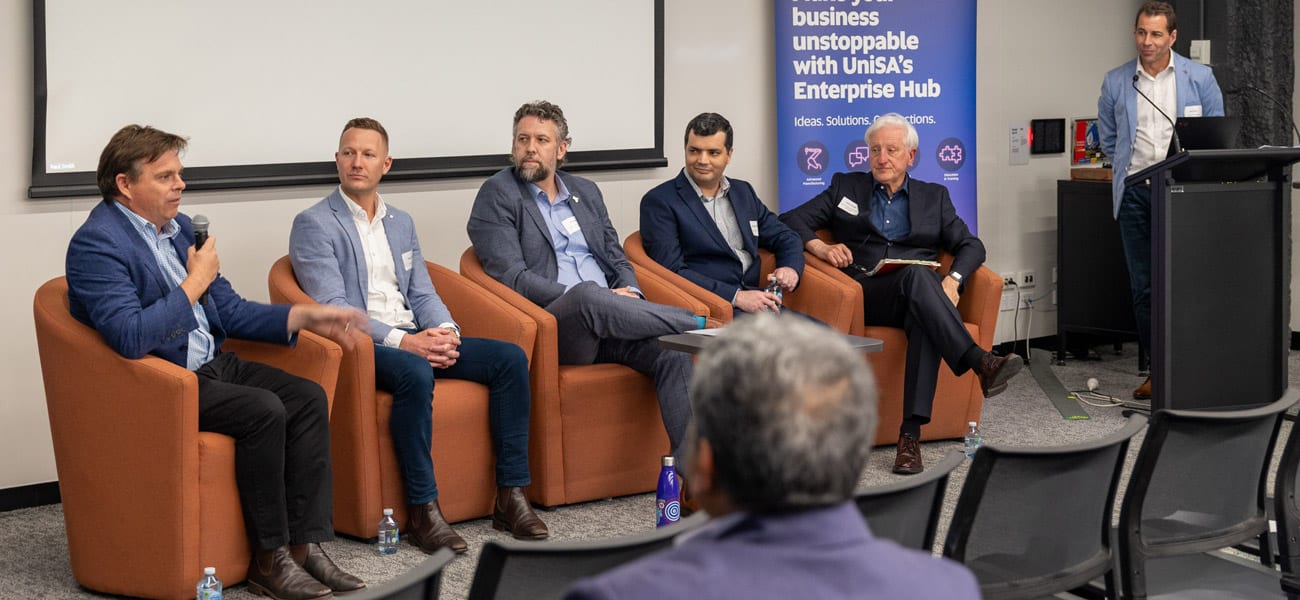
View Recording of Panel Discussion
Mr Joe Noone, Director Housing Policy and Projects, Department for Housing and Urban Development, Government of South Australia
Joe oversees policy development and delivery of housing projects supporting increased supply, innovation, and affordability in the South Australian housing sector.
Mr Jon Anderson, Modular and Engineering Manager, Sarah Constructions
Jon has over 18 years of experience delivering projects across education, defence, and health, and leads Sarah’s modular division integrating design, engineering, and manufacturing approaches.
Mr Ryan Brown, Strategic Director – Modular, SHAPE Australia
Ryan has extensive experience in modular and off-site construction across commercial and institutional sectors and leads the company’s national strategy for modular delivery and industrialised building methods.
Closing Reflections
As the event concluded, attendees gathered for networking and informal discussion, continuing the dialogue sparked throughout the evening.
The consensus was clear — prefabrication and modular construction represent not just a technological shift but a fundamental transformation in how Australia can design and deliver homes. By combining innovation with collaboration and learning from Japan’s decades of experience, Australia has the potential to redefine quality, efficiency, and sustainability in housing delivery.
The event underscored the pivotal roles of prefabAUS and the University of South Australia, in advocating for policy and contributing to capability development, and Shinka Management, in fostering international collaboration and knowledge transfer through initiatives like the Japan Housing Mission.
The conversations begun at the UniSA Enterprise Hub will no doubt continue — in factories, design studios, and government offices — as Australia charts its path toward a smarter, more resilient housing future.
Report prepared by Shinka Management based on the Industry Briefing: Insights from Japan’s Prefabrication and Modular Construction Models, held 26 November 2025 at the UniSA Enterprise Hub.
Thank you to Dario Dotlić, Manager Business Development : Enterprise Partnerships, University of South Australia, and Dr Mehdi Amirkhani, Senior Lecturer, University of South Australia, for their support in organising this event together with prefabAUS and Shinka Management.

Further Reading and Resources
- prefabAUS | A Prefabrication Industry Roadmap 2023-2033
- National Housing Accord 2023–2028
- Productivity Commission – Report on Government Services 2025 – Housing and Homelessness
- Australian Construction Industry Forum Forecasts
- Building 4.0 CRC
- ZEMCH Network Research
- International Energy Agency – Decarbonising the Building Sector
- World Economic Forum – Shaping the Future of Construction
Japan Housing Mission
Organised by Shinka Management, the Japan Housing Mission is a one-week study tour exploring Japan’s industrialised housing industry. The program offers participants direct access to leading Japanese builders and their integrated supply chains, showcasing how lean manufacturing and Japanese management practices are transforming residential construction.
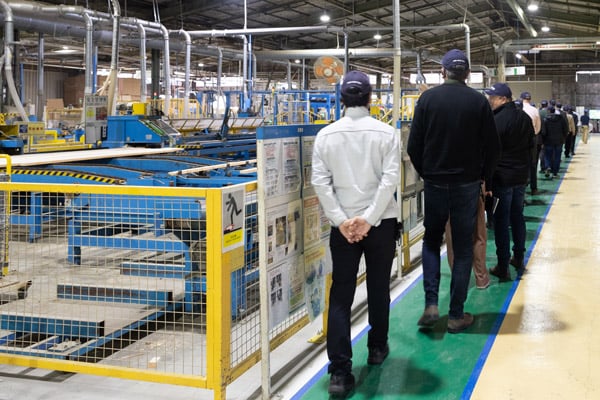
Contact us to learn about the Japan Housing Mission and future industry events